
Introduction
In this post we delve into a recent phishing campaign targeting content creators by masquerading as a prominent brand and proposing collaboration opportunities. Classic Malvertising with a .zip with a poor choice of .scr file to social engineer the victim into executing the Vidar binary. Please note the .scr was inflated > 650mb to prevent virustotal & any.run analysis.
Context
A .scr file is a Windows screensaver, which is an ordinary PE executable: double-clicking one runs it. With file extensions hidden (the Windows default), a name ending in .pdf.scr appears to end in .pdf. Padding a file with junk bytes (binary padding, MITRE ATT&CK T1027.001) pushes it past the upload limits of online sandboxes and scanners, and past the size some antivirus engines will scan. The padding is usually zeros or other repetitive bytes, so a padded file still compresses into a small archive.
The Sample
The phishing email sent to the target describes a collaboration opportunity with the company, detailing the required promotional video post’s duration and the promised payment.
At the email’s bottom, a link to the promotional materials and a personal password are provided:
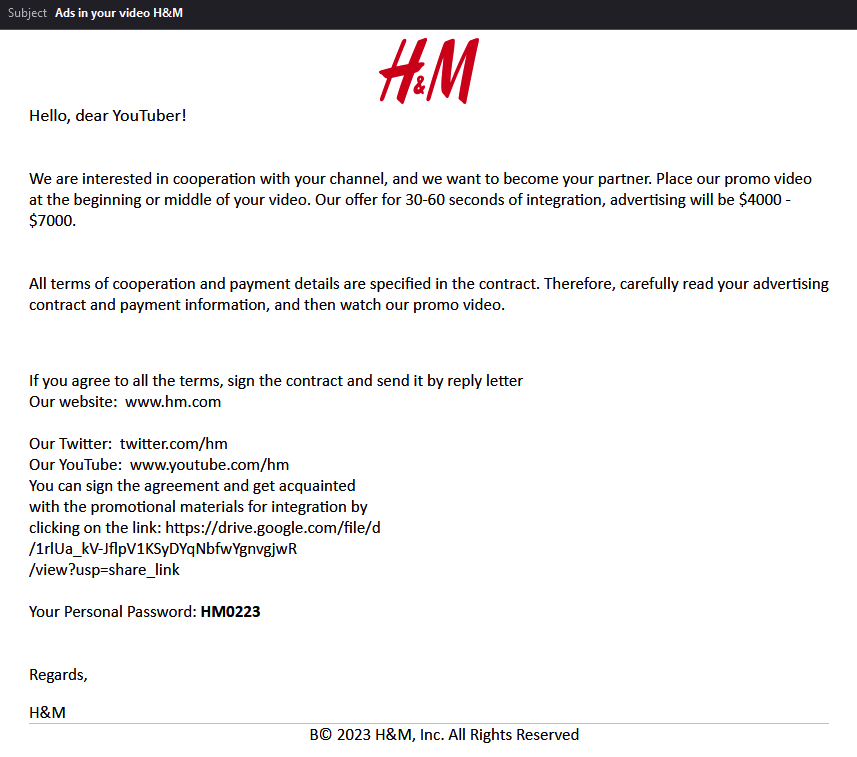
The link directs the recipient to Google Drive, instructing them to download an archive named H&M Corporation Advertising Contract.zip.
Within the archive are several decoy files related to H&M and a >600MB .scr file named H&M Advertising Contract and Payment Information.pdf.scr.

Managed .NET Loader
Analyzing the loader with Detect It Easy (DiE), we found a 32-bit .NET assembly protected by Smart Assembly:

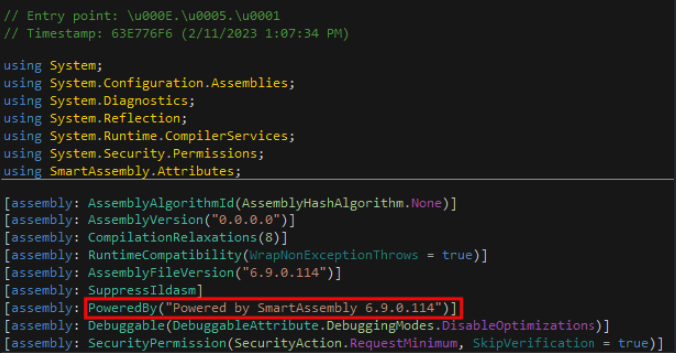
Opening the loader in dnSpy, we confirmed the Smart Assembly protection from the static information fields:
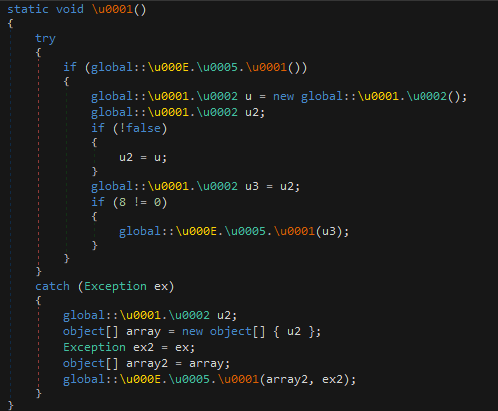
Looking at the entry point, we could see that working with the loader in its current obfuscated state would be inefficient:
To deobfuscate the code, we used Simple Assembly Explorer (SAE):

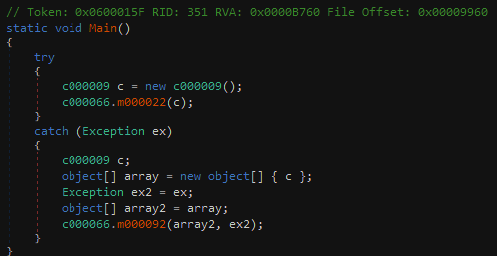
Reopening the deobfuscated file in dnSpy, we got clearer code:
Payload Extraction
The loader executes several critical actions:
- Creates an instance of
c000009, with an internal field containing the path to the injected process.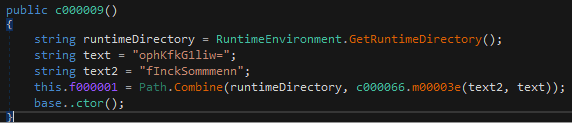
- Passes this instance to the method
c000066.m000022, which callsc000066.m00007bwith the stringfInckSommmenn. - The method
c000066.m00007bretrieves resource content from the binary resources: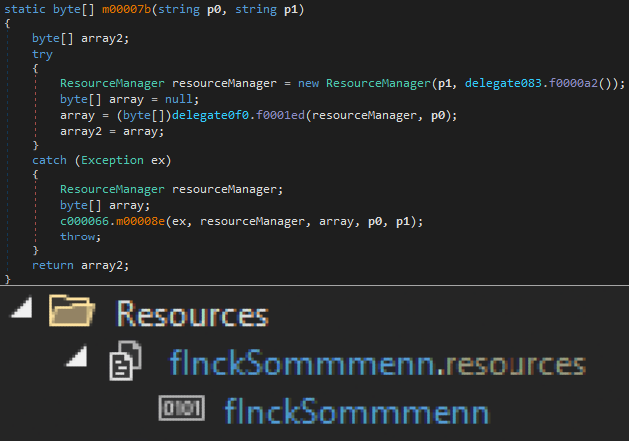
- The extracted resource content, the string
fInckSommmenn, and thec000009instance are passed toc000066.m000019, which decrypts the payload using an XOR routine and returns the decrypted binary: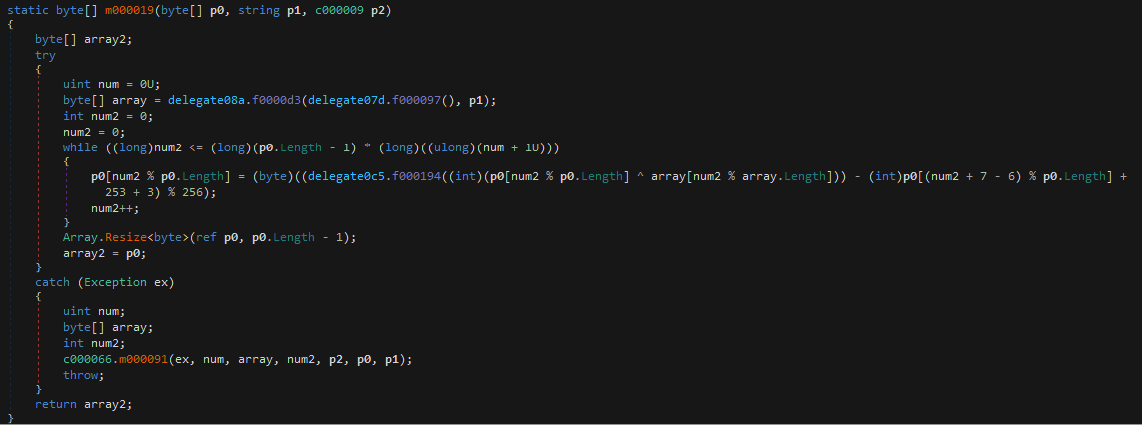
- The decrypted binary and the full path to the injected process are passed to
c000066.m00002afor process injection with the decrypted binary content:
We wrote a PowerShell script to extract the decrypted binary:
# Load the file.
$assembly = [System.Reflection.Assembly]::LoadFile("C:\Users\igal\Desktop\loader.exe")

#Initialize "NS005.c000009" object.
$ini = [Activator]::CreateInstance($assembly.Modules[0].GetType("NS005.c000009"),@())

#Retrieve the resource fetching method and invoke it.
$classType2 = $assembly.GetType("NS004.c000066")
$array = $classType2.GetMethod("m00007b").Invoke($null,@("fInckSommmenn", "fInckSommmenn"))

#Invoke the decryption method with the necessary arguments.
$fixedArray = $classType2.GetMethod("m000019").Invoke($null,@($array, "fInckSommmenn", $ini))

#Write the output to a file.
[io.file]::WriteAllBytes('C:\Users\igal\Desktop\payload.bin',$fixedArray)
Context
.NET reflection lets any .NET program, PowerShell included, load an assembly at run time and call its types and methods by name. Assembly.LoadFile brings the loader into the PowerShell process without running its entry point, so the script can call the resource and decryption methods itself and write the decrypted payload to disk; the injection method is never called. Constructors and static initializers of the types it touches do run, so this is still a job for an isolated analysis VM.
Vidar Core Payload
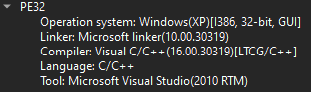
In this section we examine the Vidar stealer’s capabilities, evasion techniques, and anti-analysis methods. DiE identifies the payload as a 32-bit C/C++ binary:
Anti-Analysis Measures
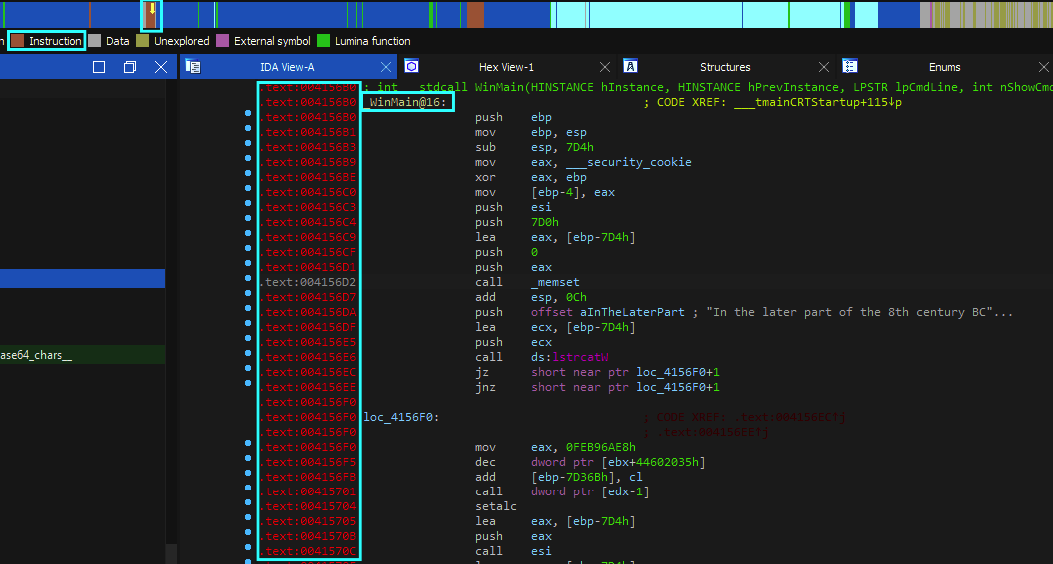
When we opened the payload in IDA, the WinMain function was not immediately recognized and appeared as an instruction instead:
Converting the data to code reveals some chunks not correctly interpreted:
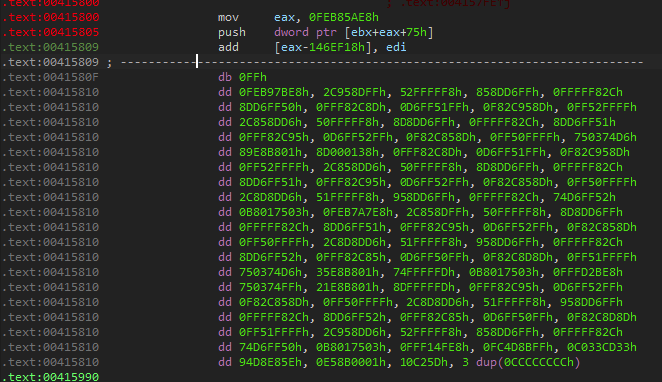
After converting the data to code, we marked the instructions from the beginning of WinMain to the relevant mov - pop - return sequence, defining the function’s end (in this case, instructions ranged from 0x4156B0 to 0x415891).
The decompiled view initially shows broken code:
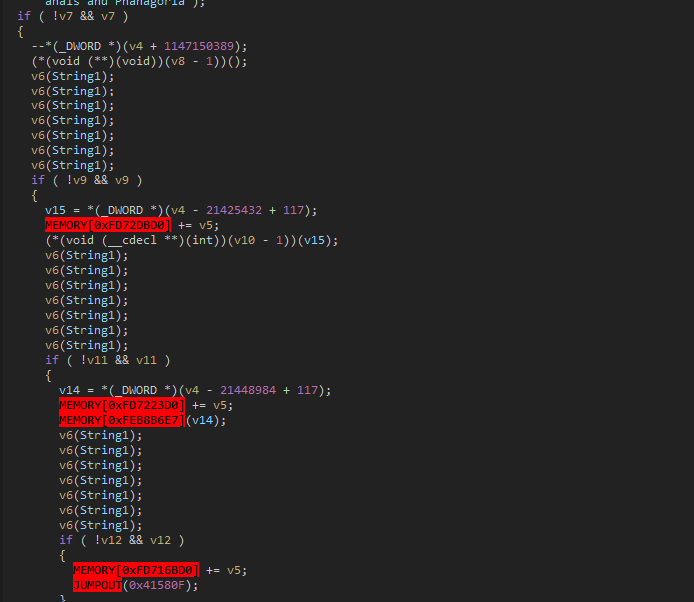
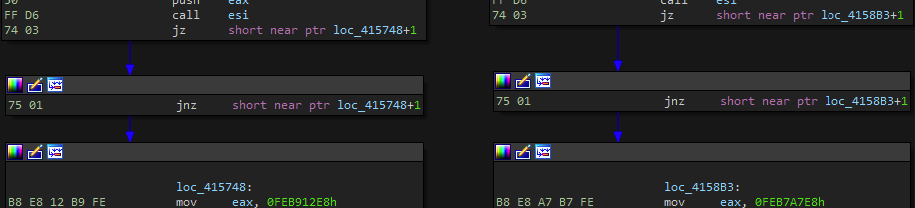
Opaque predicates are employed to confuse the decompiler:
Context
An opaque predicate is a conditional branch that always goes the same way, although a static tool cannot easily tell. The pattern here is a JZ immediately followed by a JNZ (or the reverse) to the same address: one of the two always fires, so together they act as an unconditional jump, yet IDA also decodes the fall-through bytes as instructions. The shared target is often one byte inside the next instruction, so real and fake code overlap. IDA’s decompiler shows a jump whose target is not an instruction in the current function, such as the middle of an instruction, as JUMPOUT. The script below rewrites the first jump as a short JMP (opcode 0xEB, same displacement) and overwrites the second with two NOP instructions (0x90).
With a script by @_n1ghtw0lf, we made the decompiled code clearer:
import idc

ea = 0
while True:
    ea =  min(idc.find_binary(ea, idc.SEARCH_NEXT | idc.SEARCH_DOWN, "74 ? 75 ?"),  # JZ / JNZ
              idc.find_binary(ea, idc.SEARCH_NEXT | idc.SEARCH_DOWN, "75 ? 74 ?"))  # JNZ / JZ
    if ea == idc.BADADDR:
    	break
    idc.patch_byte(ea, 0xEB)	# JMP
    idc.patch_byte(ea+2, 0x90)	# NOP
    idc.patch_byte(ea+3, 0x90)	# NOP
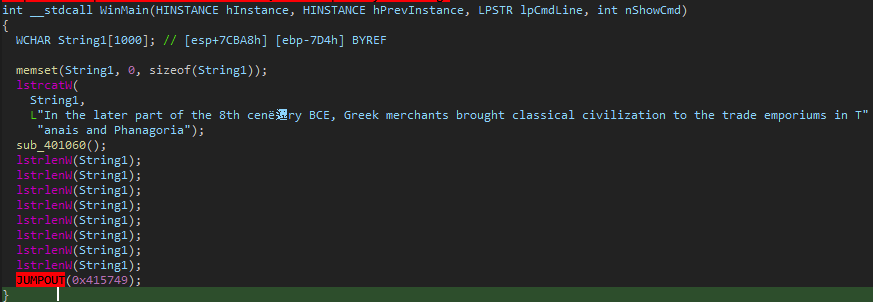
We see some JUMP OUT instruction that suggests more illusive code.
mov eax, 0FEB912E8h
Undefine EAX:
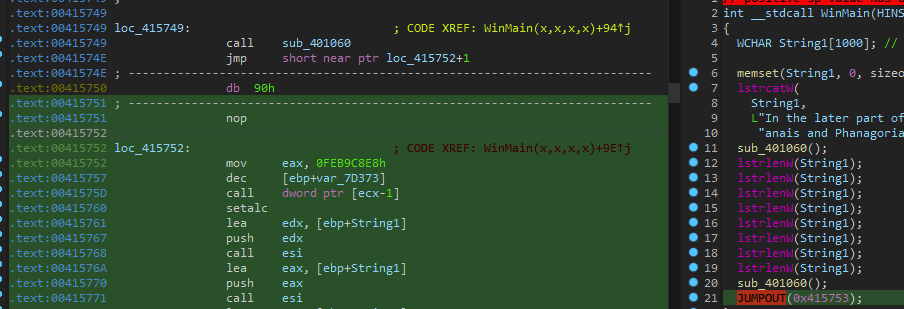
Scrubbing another EAX move;
mov eax, 0FEB9C8E8h
Clear class;
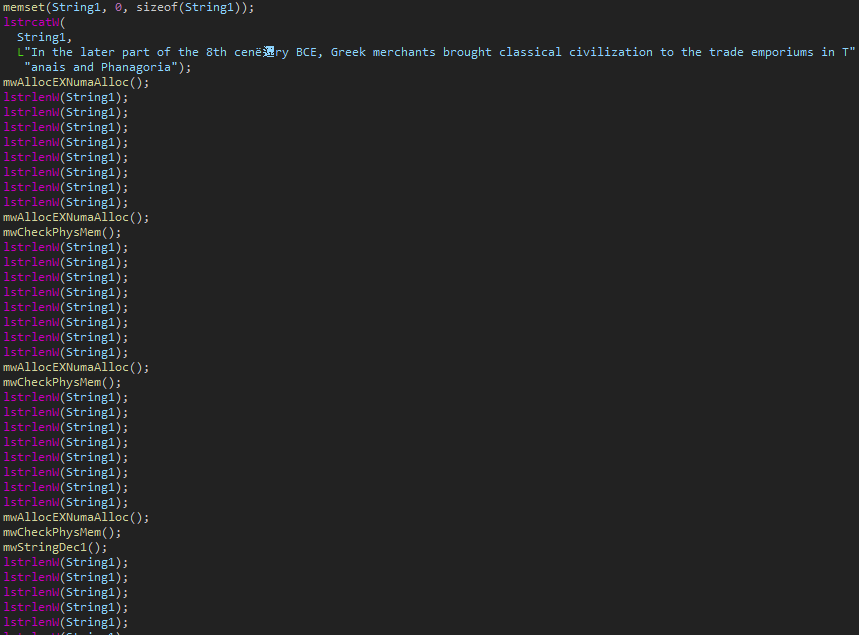
The author added useless calls to deter reverse engineers or confuse them.
Self Termination Trigger / MELT and ANTI-VM
Vidar incorporates several self-termination triggers:
VirtualAllocExNuma: Checks for systems with more than one physical CPU:
- Physical Memory Check: Terminates if system memory is below 769MB:
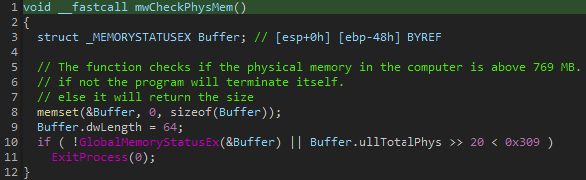
- Computer Name Check: Terminates if the computer name is
HAL9THor the user name isJohnDoe: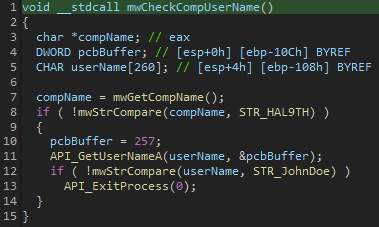
HAL9TH and JohnDoe are the computer and user names that Microsoft Defender’s antivirus emulator reports to the programs it runs, so the last check looks for emulation.
String Decryption
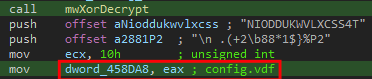
Vidar’s strings are encrypted using XOR. The decryption function requires three parameters: Length, XOR key, and Encrypted string. Encrypting strings keeps API names and other telltale text out of a simple strings dump, and because XOR is its own inverse, XORing with the same key again restores the plaintext.
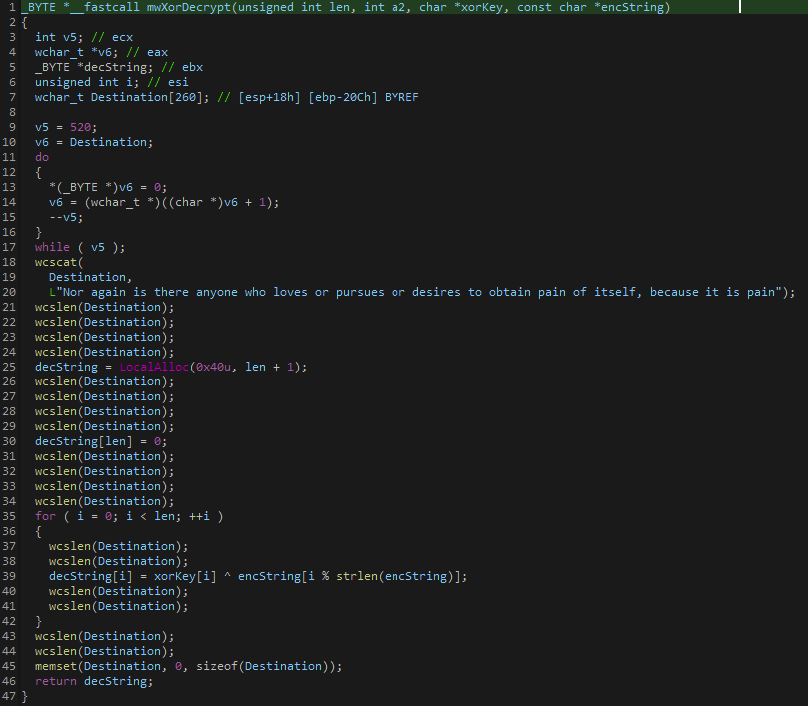
We used a modified script by @eln0ty to decrypt these strings:
import idc

START = 0x401190
END = 0x40134D
TEMP = 0x0
FLAG = True
'''
[0] = Encrypted String.
[1] = Xor Key.
[2] = Length.
'''
VALUES = []

ea = START

# XOR decryption helper function.
def xorDecrypt(encString, xorKey, keyLen):
    decoded = []
    for i in range(0,len(encString)):
        decoded.append(encString[i] ^ xorKey[i % keyLen])
    return bytes(decoded)


while ea <= END:
    # get argument values
    if idc.get_operand_type(ea, 0) == idc.o_imm:
        VALUES.append(idc.get_operand_value(ea, 0))

    if len(VALUES) == 2:
        if idc.get_operand_type(ea, 0) == idc.o_reg:
            VALUES.append(idc.get_operand_value(ea, 1))

    if idc.print_insn_mnem(ea) == "call":
        length = VALUES[2]
        data = idc.get_bytes(VALUES[0], length)
        key = idc.get_bytes(VALUES[1], length)
        VALUES = []
        TEMP = ea
        while FLAG:
            ea = idc.next_head(ea, END)
            if (idc.print_insn_mnem(ea) == "mov") and (idc.get_operand_type(ea, 0) == idc.o_mem) and (idc.get_operand_type(ea, 1) == idc.o_reg):
                dec = xorDecrypt(data, key, length).decode('ISO-8859-1')
                print(f'current location:{hex(ea)}, value will be: {dec}')
                dwordVar = idc.get_operand_value(ea, 0)
                idc.set_cmt(ea, dec, 1)
                idc.set_name(dwordVar, "STR_" + dec, SN_NOWARN)
                FLAG = False
                ea = TEMP
                break


    # move to next instruction
    FLAG = True
    ea = idc.next_head(ea, END)
e.g; Some string names will not be properly staged. IDA parsing issues do not allow foreign language intricacies, so adding a plain common string rectifies the issue:
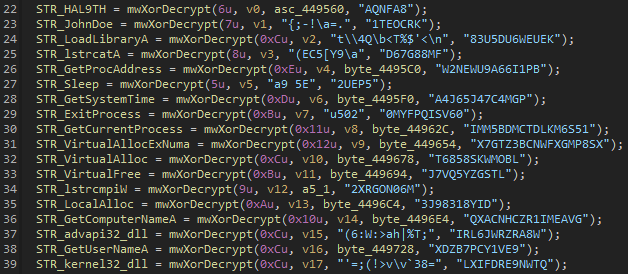
The decrypted strings output:
DynAPI Resolution
Vidar uses LoadLibraryA and GetProcAddress to resolve necessary APIs along with decrypted strings:
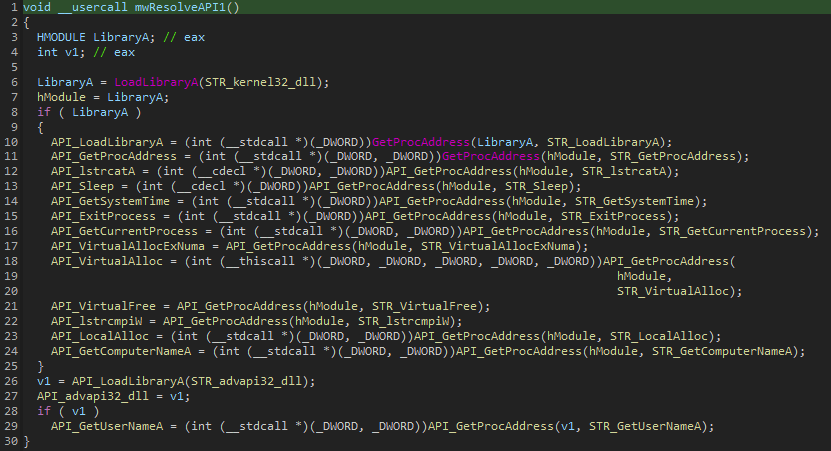
We used another script by @eln0ty to replace variable names for easier analysis:
import idc

start = 0x420874
end = 0x420901
ea = start

api_names = []

while ea <= end:
    # get GetProcAddress API name
    if (idc.print_insn_mnem(ea) == "mov") and (idc.get_operand_type(ea, 0) == idc.o_reg) and (idc.get_operand_type(ea, 1) == idc.o_mem):
        addr = idc.get_operand_value(ea, 1)
        name = idc.get_name(addr)
        if name.startswith("STR_"):
            api_names.append(name)

    # assign GetProcAddress result to global var
    if (idc.print_insn_mnem(ea) == "mov") and (idc.get_operand_type(ea, 0) == idc.o_mem) and (idc.print_operand(ea, 1) == "eax"):
        addr = idc.get_operand_value(ea, 0)
        name = api_names.pop(0)
        idc.set_name(addr, "API_" + name[4:])

    # move to next instruction
    ea = idc.next_head(ea, end)
Core C2 Communication
A DOWNLOADER is used to obtain crucial .dlls for VIDAR Stealer communication.
| DLL Name | Description |
|---|---|
freebl3.dll | Network Security Services (NSS) from Mozilla Foundation |
mozglue.dll | Memory management for Mozilla applications |
msvcp140.dll | Microsoft Visual C++ library for C++ programming |
nss3.dll | Network security services for SSL/TLS encryption |
softokn3.dll | Cryptographic library for key management and encryption/decryption |
sqlite3.dll | Accessing and managing SQLite databases |
vcruntime140.dll | Microsoft Visual C++ library for memory management and I/O |
In this case, strangely enough, Vidar used external services as shim/gaskets/DynDNS to point to their host. We see this as bad practice given that it exposes the core IP in plain text… and puts the operators DynDNS in control of abuse-rejecting entities.
Surprising considering how much effort the development team has placed into obfuscation..
This would suggest heuristic detections over SSL/TLS are heavily detected, thus in turn suggesting the end of the product (VIDAR) life cycle.
Context
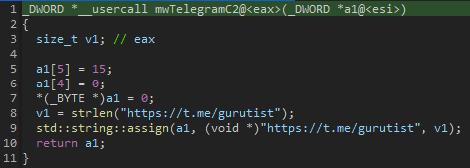
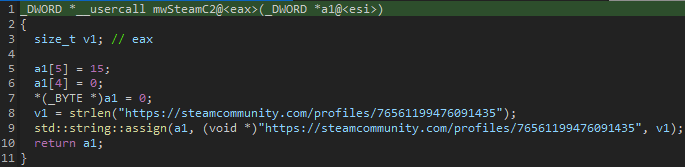
Using a legitimate service this way is known as a dead drop resolver (MITRE ATT&CK T1102.001). The malware downloads a public page, here a Telegram channel and a Steam community profile, and reads the C2 address from text on it, such as the channel description or the profile name. The operator can move the C2 by editing that text, without rebuilding the malware, and the first connection goes to a reputable domain rather than to the C2.
- Telegram:

- Steam:
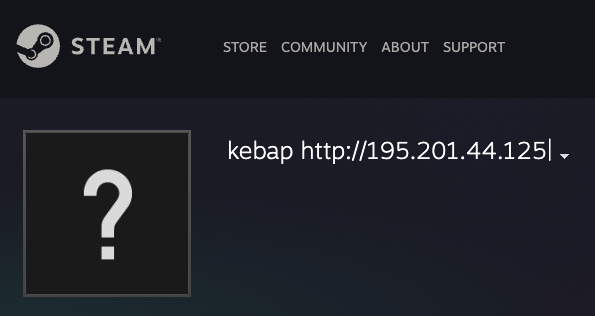
Trigger check would suggest a plain C2 as a backup.
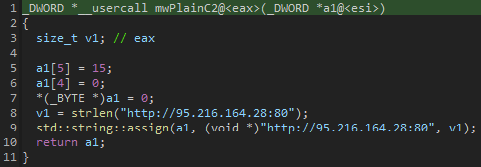
After retrieving the C2 Vidar will send a POST request to the URI:
{C2}/{BOT_ID}
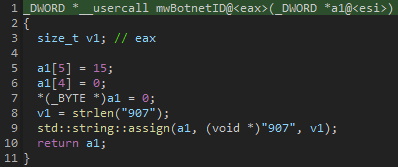
In my case the bot id is: 907 which is also assigned a plain string:
After that first request was made the client will receive a response from the server;
1,1,1,1,1,b36abae611984b4404a903d57724b39e,1,1,1,1,0,123;%DOCUMENTS%\;*.txt;50;true;movies:music:mp3:exe;
Each operation is split with ; delimiter
Conclusion
Though illusive, the VIDAR Stealer is heavily bound to heuristic detections. The Development team is attempting to squeeze the final bit by acquiring reputable services as a C2 for their outputs to evade heuristic analysis. This suggests the end for Vidar stealer and its product life cycle.
YARA Rule
rule win_Vidar
{
	meta:
        author = "dBouLabs"
        description = "Vidar Stealer Obfuscation"
        Date = "18-02-2023"

	strings:
		$dll1 = "vcruntime140.dll" ascii wide
		$dll2 = "softokn3.dll" ascii wide
		$dll3 = "nss3.dll" ascii wide
		$dll4 = "msvcp140.dll" ascii wide
		$dll5 = "mozglue.dll" ascii wide
		$dll6 = "freebl3.dll" ascii wide
		$dll7 = "sqlite3.dll" ascii wide
		$c2Fetch1 = "t.me" ascii wide
		$c2Fetch2 = "steamcommunity.com" ascii wide
		$stringDec = {
			68 ?? ?? ?? 00
			68 ?? ?? ?? 00
			B9 ?? ?? 00 00
			E8 ?? ?? ?? ??
			68 ?? ?? ?? 00
			68 ?? ?? ?? 00
			B9 ?? ?? 00 00
			A3 ?? ?? ?? ??
		}
	condition:
		uint16(0) == 0x5a4d and 3 of ($dll*) and 1 of ($c2Fetch*) and #stringDec >= 15
}
References
Co-analysed with Igal Lytzki.